Jesse’s Jazz Bread
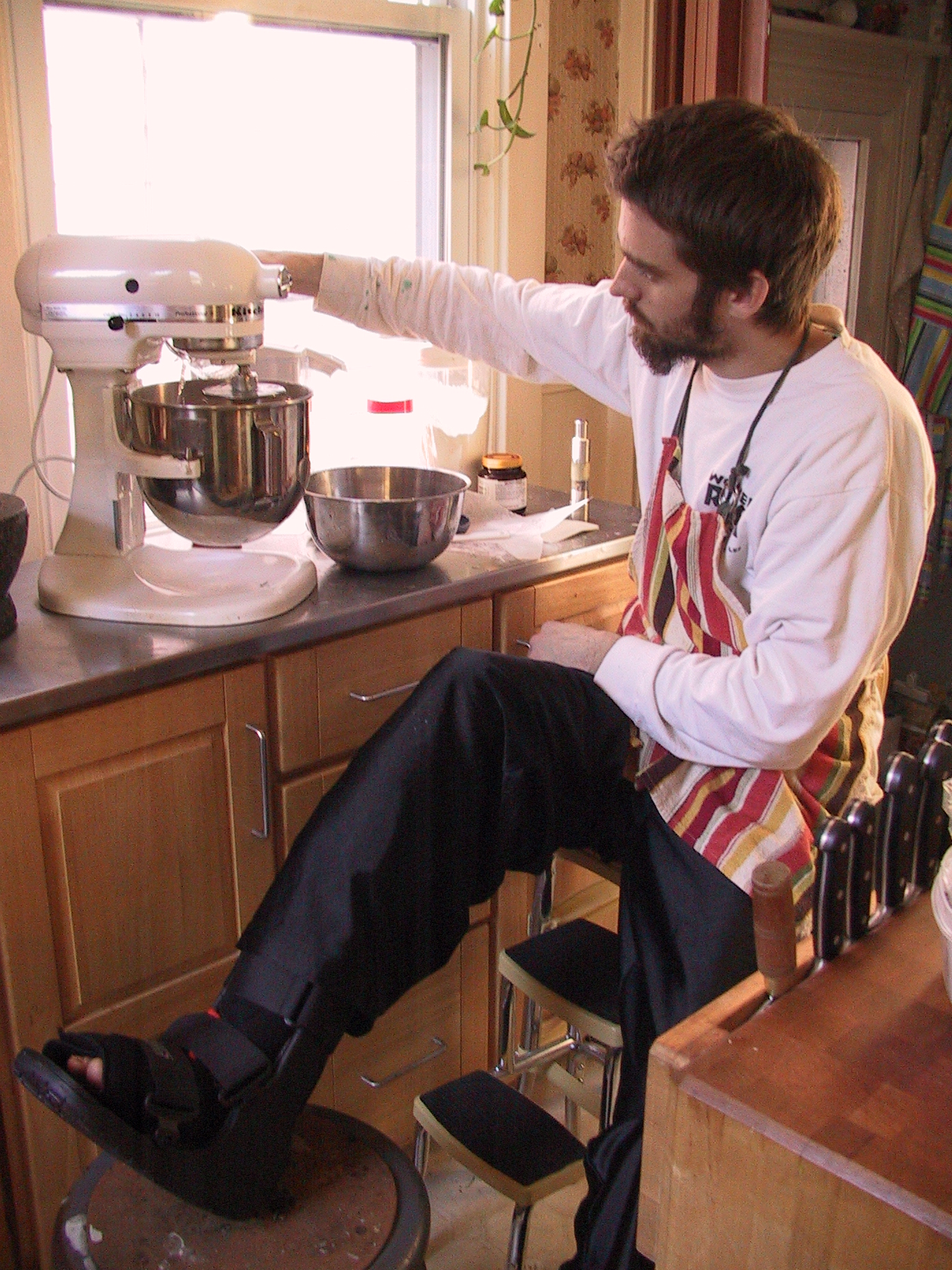
Big news: I got back in my kitchen yesterday for some low-impact cooking—yeast bread! Yeah, I needed Aurora to pull the mixer out for me, help me gather the ingredients, and put it into the oven; but, a single batch of bread is small enough and has few enough ingredients that I could assemble it on my own. Not only that, but I measured how much of the extraneous stuff I put in (read: herbs and spices), so if you want to make my bread, you’ll be able to.
Jesse’s Jazz Bread
A jazz musician uses sheet music for a guideline; feel free to use this recipe the same way. Don’t monkey around with the amounts of the key ingredients (flour, yeast, salt, and water), but feel free to experiment with the olive oil, herbs, and spices to fit your tastes and needs. The olive oil makes for what I consider to be a softer and more forgiving dough, plus it adds a bit of flavor to the final product, especially if you’re using a Spanish-style oil. I enjoy the touch of pepper, paprika, and rosemary. I think it adds a touch of flavor, but doesn’t overpower and I still can use the bread for everything—even peanut butter and jelly. I would be hesitant to use garlic powder unless you’re making it for a specific purpose where garlicky bread would match well. You can likely expect that garlicky bread would taste good on its own, but not necessarily match well for all-purpose use.
* 2.75 pounds of flour (about 8 cups)
* 1 1/2 Tablespoons kosher salt
* 1 1/2 Tablespoons (2 envelopes) dried yeast or 1 ounce fresh yeast (see note on yeast below)
* 1 teaspoon pepper
* 1 1/2 teaspoons paprika
* 1 1/2 teaspoons ground dried rosemary
If you are using active dried yeast, proof it in warm water according to the instructions on the envelope. If you’re using rapid rise (aka bread machine) or fresh yeast, just include it with the dried ingredients in the bowl of your standing mixer, being certain to crumble the fresh yeast as you add it. If you’re interested in more detailed information about various types of yeast, the Cook’s Thesaurus has a great page.
Put all dry ingredients in the bowl of your free-standing mixer and mix together with the dough hook on low speed for three minutes or until well combined. Before adding any liquid ingredients, stop the machine and scrape the very bottom of the bowl with a rubber spatulz—there’s a dead space there where the dough hook doesn’t quite get to and stirring it a couple of times by hand makes sure everything is evenly distributed.
* 1/4 cup olive oil
* 2-3 cups of hot water, depending on humidity of air
Return the mixer to low speed and drizzle the olive oil into the flour mixture. Add the first cup of water to the mixture, wait for it to incorporate into the flour, then add the second cup. Let the dough hook knead the dough for a couple of minutes before adding any more water. What you’re looking for is the dough to have a soft, supple consistency without being too wet. The dough is at the right place when it cleans the side of the bowl and doesn’t climb above the top of the dough hook. Add additional water slowly (a couple tablespoons at a time), waiting for each new addition to incorporate before adding more. Stop the machine and push the dough down to the bottom of the dough hook as necessary during this process; but, when you reach the proper consistency, it should stay where it belongs on its own.
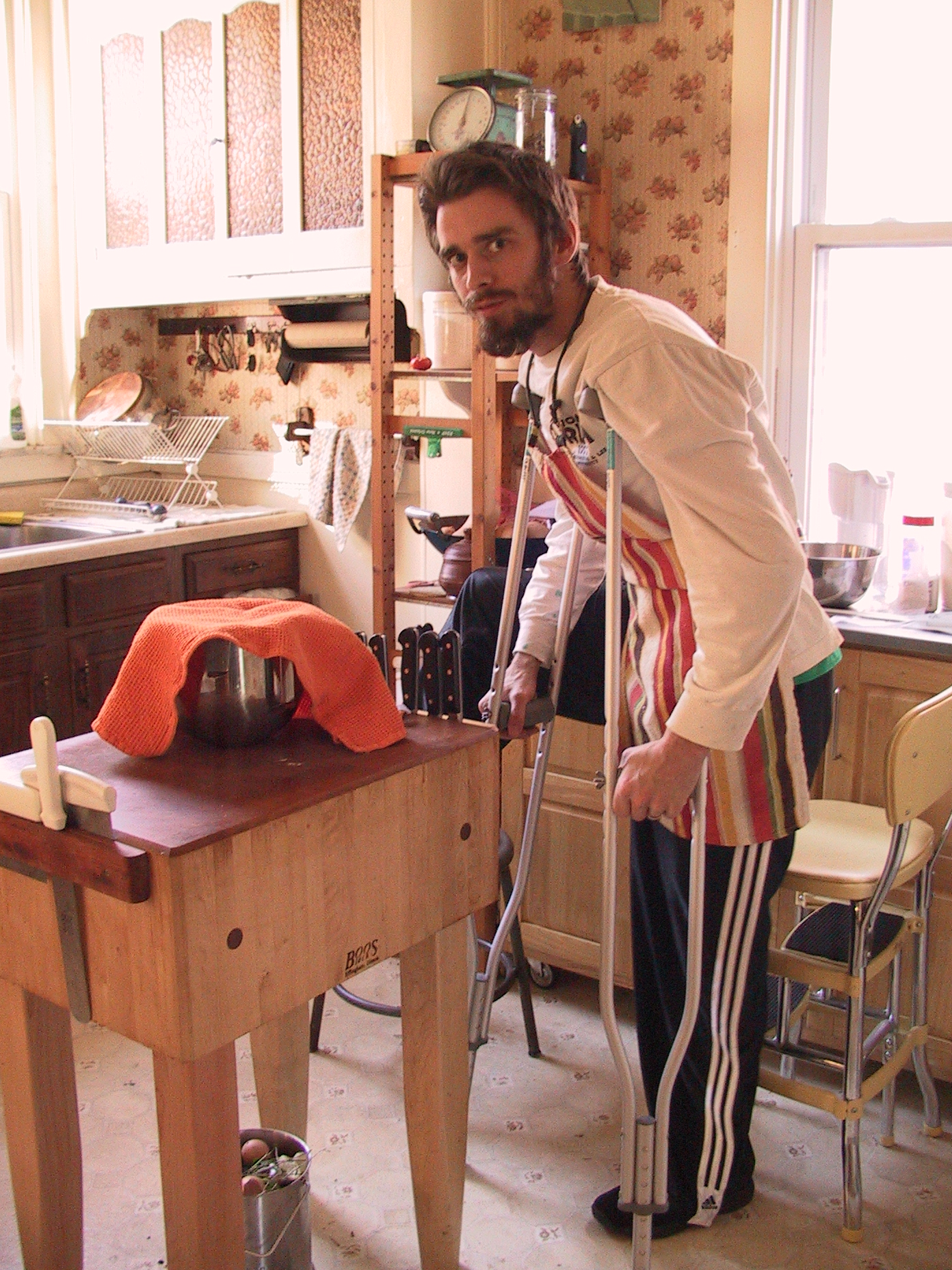
Coat the inside of a stainless steel bowl with olive oil (I usually just use the mixing bowl for this step unless I need it again immediately for another use). Roll the ball of dough around in the oil to coat the top, then cover the bowl with a dish towel and leave it in a warm place to rise for an hour and a half or until doubled in size.
Preheat your oven to 400 F.
Punch the dough down and transfer to a lightly-floured, preferabbly wooden work surface (the grain in the wood helps shape the loaves). Divide the dough into fourths. Pick each one up and let it droop over your hands to start the shape of a ball. Then, roll it along the work surface to shape it into a more coherent ball. Transfer to a cookie sheet covered with parchment paper or a reuseable silicone baking sheet (aka Silpat or the equivalent). Coat each loaf with a thin layer of olive oil, slice a few decorative marks in the surface (if desired), and dust with a very small pinch of salt, a bit more pepper, and a bit more ground rosemary. Bake for 30 minutes and transfer to a wire baking sheet to cool.
When cool, store at room temperature in a paper bag for up to a week, or wrap in plastic and freeze for up to two months. Thaw by popping unwrapped loaf into a 325 F oven for 20 minutes; thereafter, store in paper as with a fresh loaf.
December 10th, 2006 at 3:55 pm
You look like quite the grizzly man in that photo, but it’s nice to see you back in the kitchen! Hooray!
December 10th, 2006 at 5:26 pm
Plan is for me to trim the locks as soon as I feel comfortable letting my leg dangle for an hour or more (as I doubt I’ll be able to elevate it at the barber shop); I hope that’s no longer than another week and a half.