Archive for the 'Recipes' Category

Easy Cream Of Mushroom Soup

Thursday, February 4th, 2010

If the words “Cream of Mushroom Soup” conjure for you images of thick glop from a red can that you mix with milk to make chicken casserole, you haven’t had the real thing.  A freshly made batch of Cream of Mushroom is a delightful experience.

Cream Of Mushroom Soup

yield: about 6 cups of soup

  • 12 ounces mushrooms, sliced (feel free to use whatever shrooms or mix of shrooms you like.  I like to mix crimini and button, and if I have them available, I’ll do a few oyster, shiitake, and /or wild harvested mushrooms [in season] if I have them available)
  • 1 1/2 sticks of butter (I know, it sounds decadent… but the shrooms need to be browned in batches so as to allow them to saute and not to steam; and the flavor just can’t be replicated using oil.  And, you need a fair amount of fat in order to properly create the roux that is responsible for thickening the soup.  What else can I say?  Just don’t eat it every day.)
  • About 1/4 to 1/3 cup of flour (This will be a flexible ratio that you’ll have to use your judgement on.  See the instructions when it comes time to make the roux around the mushrooms, in the main part of the recipe [below])
  • 1/2 cup white wine
  • About 5 cups of stock (Chicken or vegetable.  This obviously isn’t a vegan soup but it can quite easily be vegetarian.)
  • About 1 1/2 cups heavy whipping cream (No, you can’t use milk.  You can get away with light cream if you want),
  • Pepper to taste (I used a mix of freshly ground black, white, and green peppercorns.)
  • Salt to taste
  • 1/3 cup Fresh rosemary, finely minced

In a big soup pot, melt 1/2 stick of butter.  Crack some pepper into it.  Add 1/3 of the mushrooms and salt to taste.  Saute, stirring constantly.  When mushrooms have browned, remove them from the pan with a slotted spoon and let sit to side while you repeat the process twice more.  When the last of the mushrooms have cooked, return all mushrooms to the pan.

Stir flour into the mushrooms until they are well coated and the flour has combined with the butter to the consistency of wet sand.  Don’t add all of the flour at once–add it gradually until it looks right.  Then, stir the mushrooms and flour together until the smell of popcorn wafts from the pan.  This smell is indication that your roux is ready.

Deglaze with the white wine.  Stir it in as it boils and gets absorbed.  When the pan is prtty much dry again, stir in the stock.  Make sure that you get all of the roux incorporated into the liquid–scrape the corners of the pan with your wooden spoon and make certain!  Otherwise non-incorporated roux can scorch on the bottom of the pan.

Let simmer for about 20 minutes, stirring occasionally.  Then, stir cream into soup until the soup.  Finish by stirring in the fresh rosemary and turning off the heat.  Serve immediately.

Hot Cocoa for a Cold Day

Saturday, January 9th, 2010

I really enjoy a steaming mug of hot cocoa, especially when I’ve just come in from shoveling snow.  I’ve discovered a simple technique that makes preparing it on the stove top much easier, and have taken to seasoning my cocoa with a tasty blend of spices.

I used to make hot cocoa by whisking my dry ingredients into hot milk.  As much as I whisked, the cocoa powder would never seem to want to combine with the milk, opting instead to form a dust across the surface.  Then it occurred to me, if the dry ingredients won’t mix with the wet, why not mix the wet with the dry?  By putting the dry ingredients into the saucepan first and then whisking the milk into them, it makes the task of preparing the beverage much simpler.  Everything combines neatly and you get a better result (no more lumps!)

Jesse’s Hot Cocoa Mix:

  • 1 cup cocoa powder
  • 1 cup sugar
  • 1/4 cup cinnamon
  • 1 tablespoon allspice
  • 1 teaspoon ancho chile pepper
  • 1/2 teaspoon salt

Combine ingredients thoroughly and store in an airtight container.

To prepare (1-2 servings, depending on the size of your mugs):

Put 1/4 cup of cocoa mix into a saucepan.  Set over medium heat and whisk two cups of milk into the mix.  Add the milk slowly at first, but as the dry ingredients moisten, you can add it at a faster rate.  Heat over medium heat, stirring frequently, until hot.  Top with marshmallows for a guaranteed smile.

Carribean Shrimp Fettucine

Sunday, December 27th, 2009

As I stopped at the roadside fruit stand today, I decided that I liked the look of the grapefruit and the pineapple.  I got a couple starfruit for good measure because I like them and they’re actually regional here (read: inexpensive) as compared to being such a rare commodity back in the northeast USA.

I spent much of my day today comparison shopping the many small grocery stores in San Pedro, Ambergris Caye, Belize, and had come up with a couple pounds of fettucine and a pound of shrimp as the main attractions for dinner tonight.  As I pedaled my bike down the bumpy dirt path, a plan formed in my mind for a Carribean Shrimp Alfredo featuring regional fruits and their juices to create the sauce.

Carribean Shrimp Fettucine

  • 1 pound 36/40 raw shrimp (36-40 per pound)
  • 1/2 small onion, cut to very small dice (brunoise)
  • 1/2 inch fresh ginger, minced
  • 1 clove garlic, minced
  • 1 fresh pineapple, cut into chunks
  • 1/4 papaya, cut to 1/2-inch dice
  • 2 grapefruits, segmented, and juice reserved
  • 1/4 cup dark rum
  • 2 pounds fettucine
  • cinnamon
  • pepper
  • salt
  • butter

Heat about 3 tablespoons butter in a large saute pan.  Add a half teaspoon or so cinnamon to the butter, and then put the shrimp into the pan—don’t crowd them, make sure they all fit!  (if not, do them in batches).  Sprinkle the shrimp with salt.  When the shrimp pinkify on their first side, flip them over and cook until they have pinkified on each side and curled into a ‘fetal position’.  Remove and hold.

Add a couple tablespoons more butter to the pan and another good dose of cinnamon.  Then, the diced onion and minced garlic & ginger, all at the same time, followed closely by a sprinkling of salt.  Keep ‘em moving in the pan–don’t give them a chance to burn!  As they toast up and caramelize, put in the pineapple.  This will, in effect, deglaze the pan by cooling it down and adding enough liquid so as to incorporate any fond that may have developed on the side of the pan and give the onions/garlic/ginger enough liquid to simmer rather than brown.

Toss the pineapple to coat it with the oil, spices, and aromatics.  Keep a close eye on it, stirring frequently.  As it starts to take on a bit of a cooked appearance, add the papaya to the pan, and toss to mix thoroughly with the pan’s other contents.

Start the fettucine cooking in a large pot of boiling, salted water.  Stir well as you add it into the pot and during the cooking process to prevent the fettucine from clumping together.

After the papaya has had a chance to cook for 3-4 minutes, add the grapefruit segments into the pan.  These are what is going to make this mess of fruit into a sauce.  Watch as the heat tears those suckers into shreds.  They’re going to lose all body and pretty much disintegrate into a pulpy liquid .  Pour in the rum and give it a chance to boil off.

Drain the pasta.

Add the grapefruit juice into the pan of fruit sauce.

Return the (drained) fettucine to the (empty) pot you cooked it in and stir a couple tablespoons of butter into it to help keep it from clumping.  Add the sauce to the fettucine and stir everything together to mix it.

Return the saute pan to the burner and put the reserved shrimp into the pan to reheat them.

Portion the pasta into six plates and top each with six shrimp.  Garnish further with three slices of fresh starfruit, if you so desire.

Photo credit: Eric Thompson

Belizean Papaya Saute

Saturday, December 26th, 2009

It’s the end of my first full day in Belize.  I swam in the Carribean and scoped out some tropical fish.  I made tentative plans to go on a fishing charter later this week (so I can prepare and enjoy the freshest seafood possible).  And, most importantly, I went shopping for local ingredients and used them to create some Belizean cuisine.

OK, so I don’t knows for a fact that a Belizean food scholar would deem this creation to be traditional Belizean cuisine…but having created it from local ingredients, I think it qualifies.

Jesse’s Belizean Papaya Saute

  • one onion, cut to small dice
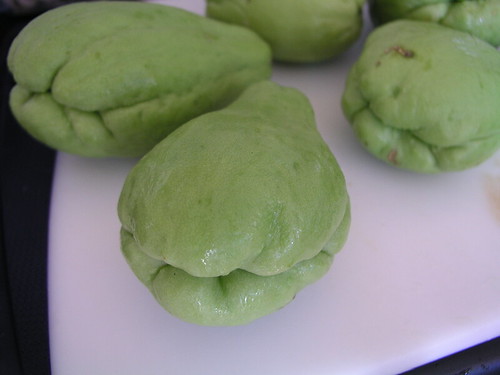
  • one mirliton, cut to small dice
  • one inch of ginger, minced
  • 1/4 inch strip of habanero pepper, meat only (no pith!), minced
  • 1/2 papaya, cut to julienne
  • Juice of 1/2 large lime
  • juice of 3 tangerines
  • 3/4 cup - 1 cup local yogurt
  • 3-4 tablespoons of butter
  • salt to taste

Melt the butter in a saute pan.  Add the onion with a pinch of salt and saute, briefly, until it starts to soften.  Add ginger and habanero, and cook until the onion has started to caramelize and the ginger is starting to crisp up just a bit.  Add the mirliton and another pinch of salt.  Saute until the mirliton has softened and is starting to release its faintly tart aroma.  Add the papaya to the pan and toss briefly so that the papaya heats up–but don’t let it cook too long, especially if the papaya is good and ripe–you don’t want it to get mushy!

Once the papaya has had a chance to heat, deglaze with the mixed citrus juices; let it reduce for about 45 seconds, then stir in the yogurt.  Toss so that the yogurt combines with remaining citrus juices to form a sauce, then serve in fashionable bowls to appreciative diners.  Garnish with a slice of lime, if desired.

Photo Credit: Julia Luscher Thompson

Apple Salsa

Monday, December 7th, 2009

Hey Corduroy–

I really like fresh salsa but fresh tomatoes suck in winter.  Any suggestions for a wintertime fresh salsa?

You can make a salsa with all kinds of stuff (think mango/pineapple; black bean and corn, etc.), but this time of year, around here, apples are probably your best bet.

This apple salsa goes great on a cheddar quesadilla.  It might also be good with some bacon, grilled chicken, and/or black beans in a ‘dilla or a wrap if you wanted to make it more of a dinner instead of a lunch.  As presented, it’s about a 0.5 (or less) on a scale of 10 in terms of heat, which I think is about right: but if you wanted it spicer, it’s easy to add more jalapeno or use a different kind of chili pepper.

Apple Salsa

  • 1/2 red onion, cut to small dice
  • 1/2 red bell pepper, cut to small dice
  • 4 cloves of garlic, chopped finely
  • 1 jalapeno pepper (meat of pepper only, no seeds or pith), minced
  • 2 apples cut to a small dice
  • juice of 1.5 limes (about 3 tablespoons
  • Salt, pepper, cinnamon, allspice: to taste

Saute onions, bell pepper, garlic, and jalapeno in a small amount of oil, with salt and spices.

When vegetables are soft and the onions have started to turn a bit brown at the edges, remove to a mixing bowl and combine with apples and lime juice.  Stir together to mix thouroughly.  Taste, and adjust seasonings as necessary.  Serve immediately or within about 3 days (kept refrigerated).

Proportions for Spice Mix

Friday, October 23rd, 2009

For the record–most people need amounts in order to duplicate a recipe. We tried this after watching you and messed up on proportions and it didn’t come out the same as when you did it. Please be a little more specific.

—Mom

Thinking back about 14 years ago, I remember wanting to know how to make tuna salad. You gave me a list of ingredients, and I asked how much of each. “I don’t know,” you replied. “As much as you need.”  If those directions worked for tuna salad, why can’t they work for a spice mix, too?  You mix it up, taste it, evaluate the proportions, and correct it as need be.

Oh well, I’m not going to argue with you.  Instead, I went down into the kitchen and made a batch of the spice mix and measured how much of everything went into it.  I hope you enjoy the spice mix as presented here, but feel free to taste and adjust according to your own palate: too bitter?  Add a bit of sugar.  Too spicy?  Add a bit of everything but the pepper.  You get the idea.

Spicy-Sweet Spice Mix (great as a seasoning for grilled pineapple!)

  • Cinnamon: .3 oz by weight (approx 1 tablespoon plus 2 teaspoons)
  • Salt: .2 oz by weight (approx. 1 teaspoon)
  • Crushed red pepper: .2 oz by weight (approx. 1 tablespoon)
  • Sugar [optional---not necessary for pineapple but useful when the spice mix is being used on something less naturally sweet]: .2 oz by weight (approx. 1 teaspoon)
  • Allspice: .1 oz by weight (approx. 1 teaspoon)

Yield: 1 ounce by weight (3 tablespoons by volume)

Hope this helps!

Candied Nuts

Sunday, October 4th, 2009

Aurora’s birthday is next week, so we had a little party last night to celebrate.  The party featured a mashed potato bar, which I had fully intended to photograph because there were so many tasty options of what to mix with one’s mashed russet or sweet potatoes.

But, as often happens, I got so wrapped up in the experience that it didn’t occur to me to grab my camera until it was too late and Aurora and I were cleaning up at the end of the night (not much point in point and shoot at that point, eh?).

Nevertheless, there was one aspect of the toppings bar that needs to be documented if for no other purpose than so I can recreate it later: the candided nuts I invented to accompany the sweet potatoes.  Lightly sweetened, they were more pleasing to my tongue than some of the ovedrpoweringly candied nuts I’ve tasted from elsewhere in the past.  Egg whites served as a binding agent to adhere the spices and sugars to the nuts, and contributed, I believe to the crispness of the coating.

Spiced Nuts

  • 3 1/2 cups mixed pecans and walnuts
  • 2 egg whites
  • 1 1/2 cups sugar
  • 1 teaspoon vanilla extract
  • cinnamon
  • nutmeg
  • ginger
  • dash of cardamom
  • 2 dashes of cloves

Combine all ingredients in a mixing bowl and toss to coat nuts.  Spread onto a sheet tray and bake at 450F for 10 minutes.  Remove from oven and use a good spatula to remove nuts from the tray to a clean mixing bowl immediately.  A couple of the nuts on the outskirts may be burnt—if that’s the case, leave them behind.  Toss the nuts a few times as they cool to make certain that they separate and don’t coagulate into one huge clump.  Enjoy as a stand-alone snack, on top of ice cream sundaes, mixed in with mashed sweet potatoes, or however else you see fit.

Folks with a sweet tooth should feel free to increase the sugar content slightly.

Fabulous Fungi

Sunday, August 23rd, 2009

Mushrooms are magical.  When they’re good, they’re delectable but when they’re bad they can kill you.  The knowledge of how, where, and what to forage is a specialized art known to few but from which all of cuisine benefits.  That’s why the Allegheny Mountain Mushroom stall is quite possibly my favorite at Farmers at the Firehouse.  The variety of what you can get there is exotic and exciting, and usually includes types I’ve never heard of.

The slippery jack has octagonal pores and a speckled top.  The Butter Bolete has a red cap and a yellow underbelly.  As opposed to the Gilled Bolete which, well, has gills; or the White Bolete, which is quite spongy.  Who knew?

(more…)

Making Blackberry Jelly

Monday, August 17th, 2009

Guest Post by Clara Lee Sharrard; Photos by Jim Sharrard

Blackberries are ripe!  Thanks to a very wet spring and summer, we have a bumper crop of blackberries this year.  Thus far we’ve had them with ice cream and made into sorbet.  I have been picking about 2 quarts per day from my “bramble” that is growing between our driveway and our neighbor’s fence.  Picking them is a lot of work since the thorns are plentiful and very sharp.  The berries do a great job of hiding under leaves.  Every time I think I have picked all of the ripe berries in one spot, I move slightly or disturb a leaf and discover another bunch ripe for the picking.

Picking berries is much different in the city that it was in the country where I grew up.  The thorns are the same, but at least I don’t have to worry about my sandal-clad toes sharing space with a snake hiding under the bushes!

I have decided to use a large portion of this year’s berries for jelly.  Homemade jelly takes a while to make but it is well worth the final effort.  You need a ratio of about three-fourths well ripened to one-fourth slightly under ripe berries.  The reason for this is that the less ripened fruit contains more pectin, which is essential for the jelly to be firm.

It takes about 4-5 quarts of berries to yield 4 cups of juice, which will make about 4 jars of jelly (6 ounces each).  If you happen to find a mother lode of berries and are wondering what to do with them, I definitely recommend trying the jelly.  We have so many berries that many of the folks on my gift list will probably be receiving blackberry jelly this Christmas.  I just hope they will appreciate the amount of work that went into producing such a heavenly product.

(more…)

Ginger Ale From Scratch

Thursday, July 30th, 2009

Garbage to Gourmet

So you’ve got a knob of fresh ginger.  You peel it before you cut it.  What do you do with the scraps?

If you’re like most people, the scraps are probably going into the garbage or (preferably) the compost.  But those scraps are perfectly good.  They’ve got lots of flavor in them even if the the texture leaves something to be desired.  So, use them to make the best darn ginger ale you’ve ever tasted. 

  • 2/3 cup finely chopped fresh ginger; scraps and peels are OK.
  • 1 cup granulated sugar
  • Juice of 1 or 2 limes (depending on your preference)
  • Water to make 1 cup liquid
  • 1 liter seltzer water
  • ice for topping off

Juice the two limes and add enough water to make 1 cup total liquid.  Combine in a saucepan with the ginger and the sugar.  Bring this mix to a boil, stir once, and remove from heat.  Let the ginger steep in the syrup for at least a half hour to extract the flavor.

Strain the syrup into a pitcher with a bit of ice to chill it down, if it’s still warm.  Add seltzer, and top with ice.

Yield: 2 quarts soda