Doughnuts Worth Writing About
Tuesday, December 24th, 2019I’ve been trying to perfect my doughnut recipe for at least 3 years now.
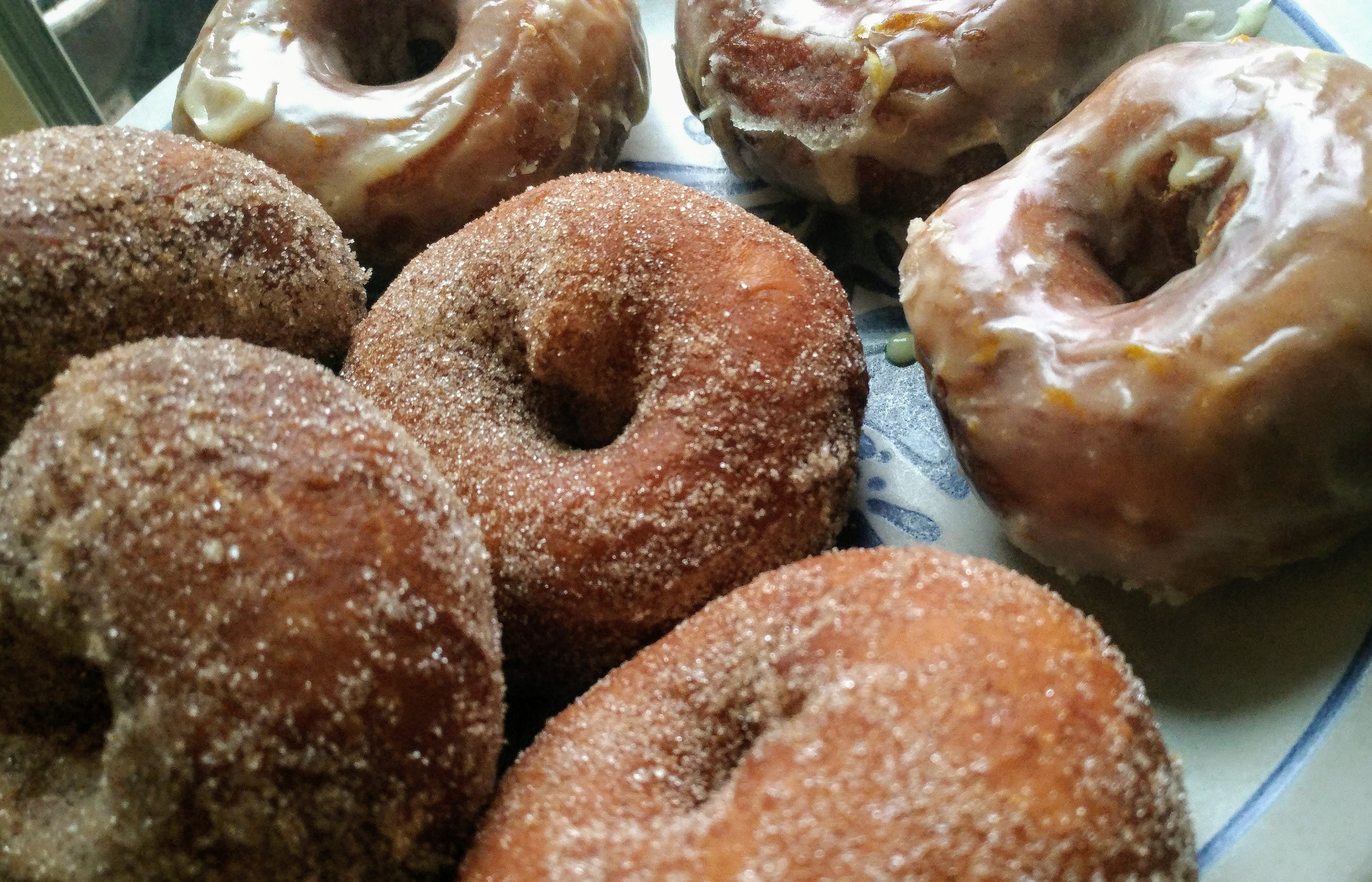
That sounds more impressive than it actually is; I’ve probably only made them a half dozen times in that stretch. But each time, I’ve discovered something that didn’t quite work the way I wanted it to and come up with a piece of the puzzle on my next attempt. And now I finally have a recipe worth writing down and remembering.
The yeasted dough is light and flavorful. It takes a glaze or spiced sugar quite nicely. It’s absolutely mouth-wateringly delicious sliced open and spread with a bit of jam, even if I still haven’t conquered a technique that lets me inject jelly into a pocket in the center. In short, it’s finally worth writing down.
A couple of notes that are important to getting this recipe to work correctly:
- flour type matters: For this recipe, all-purpose flour is the right choice. trying to use bread flour makes the finished doughnut a bit too chewy.
- knead minimally: A bit of kneading will bring the dough together. But too much develops the gluten too much. So, just so much and no more.
- the size of dough balls matters: It’s tempting to say close enough is close enough. But for the dough to cook predictably, so that you can have 3 or 4 doughnuts all in the pan at once and know that they are all done at the same time, you want to pull out your scale and weigh them out to 3 ounces each. Precisely.
- make the hole in the center bigger than the finished hole should be: Because as the bread cooks, it will rise and the hole will shrink. And the hole helps them cook all the way through, as they are exposed to more oil.
- make the discs flat for jelly nuts: Too thick and they don’t cook all the way through.
- the oil temperature matters: too hot and the doughnuts get overdone on the outside before they are done in the center. Too cold and the doughnut gets greasy. 375 when the doughnuts go in, this will drop the temp to 350 for cooking. Just what you want.
- temp the doughnut to make sure that it’s done: It’s easy to pull the doughnut too soon and then you bite into the center and find it’s still doughy. Use your instant read digital thermometer (I recommend Thermoworks’ Thermapen. If you’re left handed, it’s worth it to get the MK4. I get nothing for suggesting this. I just like their product). Aim for about 180 degrees in the center.
- Have your toppings ready for as soon as the doughnuts come out of the oil: You want to coat the doughnuts with the spiced sugar or the glaze while they are still hot and fresh, or the toppings won’t stick.
- let the oil recover between batches. The time you spend glazing or sugaring the freshly cooked doughnuts is probably sufficient. But double check the oil temp before you put each round into the grease.
Yeasted Doughnuts
Ingredients:
- about 8 cups of all purpose flour
- 2 Tbl Kosher salt
- a couple good fistfuls brown sugar
- A nice shake of cinnamon
- A bit more brown sugar–maybe a couple Tbl
- 2 Tbl dried yeast. The regular stuff. Not the instant stuff.
- 2 eggs
- 1 stick (8 Tbl) butter
- 120 degree water– not quite 4 cups. Enough to bring the dough together.
Technique:
- Combine the flour, salt, first instance of brown sugar, and the cinnamon together in a large mixing bowl.
- Pull out about a cup of the mixture and add the second instance of brown sugar & the yeast to it.
- Add about a cup of the 120 degree water to this. Stir a couple of times and let it sit for about 10 minutes to make a sponge.
- Meanwhile, beat the eggs in a small bowl and then beat the melted butter into it. Stir this into the large mixing bowl of flour etc.
- When your sponge has sat and is nice and foamy, stir it in with the flour, egg, butter mix. Heat your water back up to 120 degrees (check the temp!) and then stir in enough of it with a wooden spoon. When the dough comes together, pour it out onto a well-floured surface and knead just enough to bring it together.
- Wash and dry your big mixing bowl. Put the dough into it, coated with just a little bit of olive oil. Cover with a dish cloth and leave in a warm area for an hour or so while you go watch cartoons, read the newspaper, do some laundry, or whatever else it is you want to tend to while you’re letting the dough rise. The contestants on teh Great British Baking show always fret over their stuff during bread week. I always suggest to my television that they should have brought a crossword puzzle with them. They never listen.
- Divide the risen dough into 3-ounce pieces. Shape them into balls and let them rest for about 20 minutes while you make the glaze and the spiced sugar. Also heat up the cooking oil in a deep cast iron skillet. If you’ve got my stove, you want the oil to heat on about level 4, bumping it up to 6 or 8 as you approach cooking time. But you’re going to have to do some experimenting with your stove.
- Shape the doughnuts by gently pinching and turning to make a hole in the center. You know what they’re supposed to look like.
- When your oil hits 375, add doughnuts to the Fry 4 doughnuts at a time if you’re using my skillet. Your pan might call for more or fewer. I tried to figure out the magic time, but it was all by visual cues. And verified that they were ready by taking their internal temperature.
- Glaze or sugar the doughnuts as soon as they come out of the oil.
- Repeat until they’re all done. For my $0.02, the glazed are fantastic hot but the spiced keep better as leftovers. You can microwave them before serving for a second go-round.
Glaze- Zest from a couple of clementines.
- Juice from said clementines
- Powdered sugar
Spiced Sugar
- Granulated sugar
- Cinnamon
- Cardamom
- Nutmeg

