Archive for the 'Sustainable Food' Category

Really Good Tomato Soup

Sunday, September 21st, 2008

When it comes to most foods, admittedly, I’m a food snob. Not that I require my meals to consist of eight courses composed of the bestest of ingredients flown in from around the globe; but rather that I require my meals to be created from honest ingredients, well crafted, and consist of actual food (not processed food products).

My tendency toward snobbery is even more pronounced when it comes to tomato soup. I grew up eating a delicious pureed soup made from fresh tomatoes from my parents’ garden. When, on occasion, as a young child I was offered a bowl of Campbell’s tomato soup, I was convinced that the stuff in the dish in front of me couldn’t possibly be what it claimed to be, because it just didn’t taste good and had completely the wrong consistency: all watery with no texture to it.

So, of course, I now make my own tomato soup so that I can enjoy the delicacy the way it was meant to be eaten: from peak season tomatoes handled with care. It’s basically my mom’s recipe with a few of my own changes made to it.

(more…)

Metonymical Barns

Sunday, September 7th, 2008

I was browsing through the Sunday Times today and I came a cross this fascinating examination of the disappearance of the barns that used to serve the small farms.  As the farms are snatched up by agribusiness, the barns get in the way.  They’re purposefully eradicated, or neglected until they crumble.

This is a deft use of metonymy, the rhetorical construct whereby an issue is illuminated by a symbolic examination of a related object, and Monica Davey uses it to great effect in this piece.  By tugging at the loose threads of the crumbling barn, she reveals the crumbling status of the agrarian class and the concentration of resources into the hands of the few and the wealthy, whom, it seems, often place higher priority on their potential gain than they do on families: as Davey writes, “Some here tell of people who call the widows of farmers who have died days or hours earlier, hoping to secure land.”

The conglomeration of our food production leads to reduced quality because the larger volume leads to decreased attention on the details; reduced options because the big guys are going to tend toward mono-cropping; increased reliance on chemical additives because farming untold acreage of a single crop reduces soil quality and is often only viable through production of a modern, spray-resistant hybrid varietal; and reduced security because the land that used to support several families now is tended by a relatively small number of individuals and their “air-conditioned, G.P.S.-equipped combines and tractors.”

Every time you shop for produce and wind up with pretty peaches that taste as fake and plastic as they look; sculptured tomatoes that have white interiors that taste like rice cakes (and are almost as hard); eat a sweet that gets is flavor from high fructose corn syrup… think of the barns, think of the families, think of hte lifestyle that’s being eradicated with the quality of your options—and make an effort to go to the farmers’ markets, to the roadside stands, to the orchards in your area and buy your food from the families who are still farming so that they can still farm in the years to come.

Or else, the barns may continue to dwindle and die.

Berry Heaven

Tuesday, August 19th, 2008

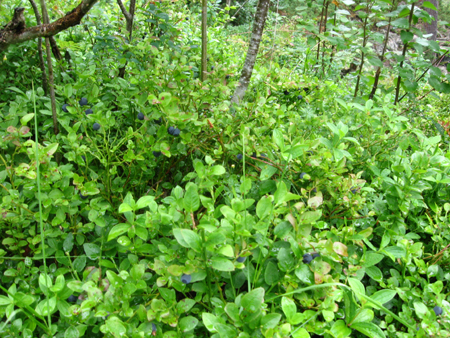
The hills around our cabin at Flaakoie

had a full cover of blueberries

and cloudberries nestled in the marsh.

Raspberries lined the old logging road.

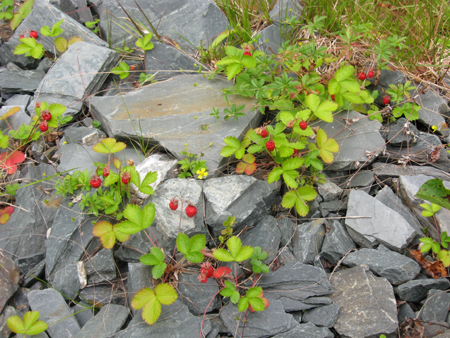
But even amidst such brilliance of foragability, the tiny wild strawberries lurking in odd corners and peeking from trap rock tasted like candy from the vine.

Served atop flaky biscuits with a dollop of creme fraiche.

Country Living in the City

Monday, July 28th, 2008

Guest Post by Clara Lee Sharrard

We live in an old Victorian home on a 50 x 125 foot lot in Springfield, MA. As I look around the yard, I am amazed at how many different foods we are managing to grow in this small amount of space. I sometimes hear people claim that they live in the suburbs because they need a big yard to be able to do anything with it. Taking an inventory of what I’ve got on my small patch of land, I’m not sure I agree.

(more…)

Western PA Farm Tour

Tuesday, July 15th, 2008

On Saturday, July 26, you can visit thirteen local farms and find out more about what they grow, how they do it, and why they do things the way they do as part of the PASA Buy Fresh Buy Local Summer Farm Tour.  The cost is $10 per car, payable to the first farm you visit.  That farm will provide you with a pass that will admit you to events at all other participating farms.

If you’d like to see a list of all the farms participating, and find out a little bit of background information about each of them before you embark on the tour, check out this map.

Where Giant Eagle Milk Comes From

Wednesday, July 9th, 2008

Around the time I visited Turner Dairy, I noticed an announcement from Giant Eagle that all milk sold under their brand name was sourced from farmers who certify that they do not use rBGH (aka rBST) in their milk production—which is fantastic; anyone who has read descriptions of the udder sores and infections that cows given the hormone suffer must realize that there is a price to be paid for the 10% increased milk production the hormone causes. While the FDA says that there is no significant difference between milk from cows given the hormones and milk from cows not given the hormones, I’d disagree—even if the two substances appear the same in laboratory tests, the comfort and well-being f the animal providing the milk is of definite concern to me.

I also like to buy my foodstuffs from as local of a source as possible, which led me to ask, where does Giant Eagle milk come from? I finally heard back about where Giant Eagle milk comes from: Dean Dairy. I got a phone call from Annie at Dean, who reported that the processing plant for the milk is in Sharpsville, PA; and that 85-90% of it comes from farms in Pennsylvania, with the balance being sourced from Michigan, Indiana, and Wisconsin. She says that there is no difference between milk sold under the Giant Eagle label and the milk sold under the Dean label—Dean just acts as the provider for Giant Eagle’s store brand.

(more…)

PGH Project to Help Whom Find Local Food?

Monday, June 23rd, 2008

The Pittsburgh Post Gazette reports today that Produce Grown Here (aka the PGH project) is going to begin a push to get more local foods into restaurants and consumers by focusing its efforts on Eat ‘N Park and Giant Eagle. Providing assistance to these two corporations in finding food seems akin to offering the Red Sox and the Yankees assistance in finding baseball prospects.

I, of course, fully support the idea behind the PGH Project: that everyone ought to be using as much locally-grown produce as possible. On the other hand, it seems to me that targeting their efforts at the big boys of the local food chain doesn’t make all that much sense. After all, both Eat ‘N park and Giant Eagle have massive amounts of resources at their disposal. Eat ‘N Park already has a Director of Sourcing and Sustainability on staff and Giant Eagle has a vertically integrated food supply chain and handles all of its own warehousing and distribution. Surely these corporations could use some of their muscle to get local foods without having a nonprofit give them assistance?

Why not target smaller operations that don’t have as many resources behind them? Really, I want to know. Anyone out there associated with this effort? I’d love to hear your reasoning.

I’d also love to see you throw a bone to the little guys.

Garden Dreams

Thursday, June 19th, 2008

I should’ve had my camera with me on Saturday when I went to visit Garden Dreams in Wilkinsburg, because it was tough to believe the thriving garden that was hidden there. Fortunately, Google Maps has streetview for Pittsburgh, so you can get a glimpse of a preview for yourself until such time as I can get back out there and take a couple of photos.

An old Victorian house sits at the corner of Center and Holland. Anyone looking at it can tell that it used to be quite stately; it’s plain to see by the many boarded windows that the building has known better times. The yard behind it is another matter altogether. I’d not hesitate to gamble that it has never known such care and cultivation as it knows now: kale, tomatoes, leeks, fennel, peppers, and more…. and that’s just what they’re growing in their small ‘farm.’ On top of that, there are plants aplenty for the home gardener to purchase and transplant—and expert advice to go with it.

When Aurora and I were buying our tomatoes (two plants that we chose from 80+ varieties in their catalog), we were advised not to be afraid to plant them deeply. We hadn’t even known that most gardeners plant their young plants up to their first set of branches, but the helpful attendant (who recounted his winter spending 80 hours a week caring for seedlings in the basement to get ready for the summer) advised us that if we cared to, we could go even deeper. “When we plant, we use a post hole digger and put them down to about here,” he said, gesturing towards a spot just a few inches below the plant’s top. “They’ll grow roots the whole way down the stem and it gives them a much sturdier base.”

Pittsburgh continues to astound me with the breadth of resources available here—every time I think I have a good handle in what the city has to offer, I discover something ‘new.’ If you’ve been accustomed to getting your plants from the big box retailer, swing by Garden Dreams and experience what a wide selection, knowledgeable help, and attentive customer service are like. Anyone who’s been buying their plants from outside the Co-Op (as Aurora and I have done) should visit to find out where those plants actually come from. Anyone interested in finding out the best way to care for their tomato plants might stop in periodically over the summer and keep track of their experiment in progress: three rows of tomatoes to be staked three different ways: with stakes, with cages, and with a bamboo cone. Really, it’s a great resource for anyone who wants to garden better.

Garden Dreams is located at 810-812 Holland Street in Wilkinsburg; and can be reached by phone at 412-638-3333.

‘Local Challenge’ to the Co-Op: Remove Fiji H2O

Thursday, June 12th, 2008

Pittsburgh’s East End Food Co-Op has issued a challenge to Pittsburghers: eat as local as possible for one month, from July 15–August 15. “It’s an honor system-based [challenge]; those wishing to participate will simply sign a large poster at the Co-Op and try their best.” For the purpose of the challenge, they define local as being within 100 miles. To encourage participation and help participants along, the Co-Op is inviting people to enjoy a potluck recipe swap and celebration of local fare every Wednesday during the challenge, starting at 7:00 PM. The first event will be on July 16.

I doubt the Co-Op will be distributing Fiji at these events, but should a local food challenge participant wish to, he or she could quite easily wash down their spinach salad, sauteed kale, local-beef loaf, and berry cobbler with a bottle of Fiji water purchased from the Co-Op’s shelf. In other words, you could wash down a 100-mile meal with a 7600-mile beverage.

I have complained to the Co-Op about the presence of this non-local product on the shelf of our local food co-op, and how the very idea of a substance as basic as water being shipped halfway around the world is in violation of the concepts upon which the co-op is built. I received a reply on the topic in October from Mark D. Perry, the Co-Op’s merchandising manager:

(more…)

Three Rivers Arts Festival Greens its Waste Stream

Wednesday, June 11th, 2008

I just got back from lunch at the Three Rivers Arts Festival and much of it is the same as it always is: vendors similar to what I’ve seen in the past several years are selling art that’s similar to what I’ve seen in previous years, flanked by food booths similar to what I’ve seen in previous years. The big change at the Arts Festival this year is how they are handling the waste generated through the sale of food. In past years, recycling has been either nonexistent or spottily enforced, resulting in comingled waste streams: it didn’t matter what the bins were labeled, they likely contained preety much the same cross-mix of food, paper, cans, and bottles.

This year, there are three separate waste container areas: composting, recycling, and trash; trash by far represents the smallest percentage. In order to ensure that the waste streams are being treated properly, begloved volunteers monitor festival-goers as they dispose of their waste and rifle through the bags to police their contents. In other words, they’re making certain that the recycling bags are recyclable and the compost bags are compostable.

The breadth of what is being composted is quite impressive: all food waste, both from inside and outside the festival; paper products, including waxed; the corn-based plastic flatware being distributed at festival food booths; corn-based plastic cups (recycling number 7). Doesn’t leave much in the category of ‘trash’; those bags were practically empty even as the other categories filled.

The composting stream is being handled by Indianola-based Agrecycle, Inc. (no website available). They have picked up one load of compost from the Arts Festival and are processing it today: grinding it to reduce the particle size and putting it into one of the composting windrows at their Washington County composting site.

It’s thrilling to see that the Arts Festival is doing so well with making certain that the waste inevitably generated by feeding so many people in an open air market is being handled in as sustainable a manner as possible: until everyone starts carrying their own napkins and cups, strictly enforced public composting and recycling is a beautiful sight, indeed.