Archive for the 'Cooking Tips' Category

Preparing for Potlucks

Friday, December 1st, 2006

Jesse–
We got to a lot of pot-lucks, and I have trouble coming up with a good entree dish to bring that needs to be made the day before.

Ideas?

Really, as far as day-before potluck prep goes, I think it works better with desserts than it does with entrees. Cookies, brownies, and fruit crisps are all easy-to-make desserts that travel easily and keep well overnight.

If you’re sold on the idea of making entrees though, I’d have to recommend quiche as a simple solution. There is an endless variety of what type of quiche you can make because every time you switch the fillings and/or the cheeses, you’ve got a new dish. Not only that, but quiches are ridiculously easy to make. So, with some help from my father-in-law, Rob Luscher, and my wife, Aurora, here’s how you can make a dish to impress for nearly any occason:
(more…)
Bread Baking Update

Wednesday, November 15th, 2006

Walking the Walk

I have not had store-bought bread for almost two weeks now: I’m following my own advice and baking my own. It’s turned out to be a fairly easy process; I’ve baked two batches at home (though I have been making bread at work some lately–experience which has helped my learning curve quite a bit), and each has lasted for about a week. The improvement from my first batch to my second was quite noticeable—it went from being not bad to being pretty darn good. I’ve got a couple of tips that might help you kick the store-bought habit, too.

(more…)

Food Mill Makes Easy Work of Applesauce

Sunday, November 12th, 2006

Dear Corduroy Orange:

I really enjoy fresh applesauce but I hate the effort of peeling and coring all of those apples. Is there any way I can avoid that?

Peter Rambo

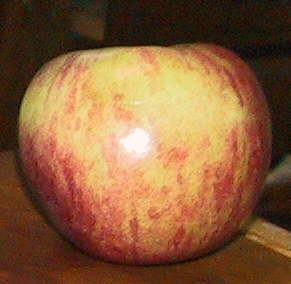
cortland apple grown in Western PA

Dear Mr. Rambo—

There sure is, though unfortunately, you didn’t ask me early enough in the season for you to take advantage of the technique with your namesake apple, which is tart enough to make a tasty sauce.

The secret to making effortless applesauce lies in having a food mill for your kitchen. It’s a handy device that allows you to press the cooked down apples through a sturdy stainless steel sieve. The “saucy” part makes it through the holes; the seeds, skin, and pulp stay behind. The result: smooth and tasty homemade applesauce without having had to peel a thing.

(more…)

More Winter Squash Tips

Thursday, November 2nd, 2006

For a basic primer on cooking delicious roasted winter squash dishes, check out my article in today’s edition of the Pittsburgh Post Gazette.

squash and marmalade

Here are a couple more tips to make your cooking experience easier: (more…)

Hot Apple Cider

Thursday, October 26th, 2006

So easy yet so good

Lately we’ve had at least a gallon and a half of orchard-fresh apple cider in our fridge at all times. It’s a tasty treat straight out of the icebox, but even better when heated.

I’ll pour some into a saucepan and let it heat slowly on the stovetop. To give it that extra bit of flavor, I spice it up with a cinnamon stick, about 4-6 whole allspice, and about 3 whole cloves. Using the whole spices helps keep sediment out of the bottom of your mug, and it also helps control the strength of the flavors imparted (when using ground cloves, for instance, just a shake too much and they take over the flavor of the drink). Because I keep the heat very low under the pot, the spices have a chance to infuse the beverage with flavor; then, I’ll let it simmer for 5-10 minutes or so just to make sure. If I’m feeling saucy, I’ll add a glug of Calvados to it, though i’ve heard it’s also good with brandy or rum if you’d prefer. Then again, why bother adulterating it when it tastes so good as it is?

Take advantage of the treats autumn offers. Find an orchard not too far from your house and take a weekend drive. You’ll thank yourself for taking the time when you get the tree-fresh apples and fresh-pressed cider.

Making a More Complex Vinaigrette

Friday, October 20th, 2006

Perhaps you want a somewhat moe complex salad dressing than a simple mixture of oil, vinegar, and spices. Something with fruit in it, perhaps? I’ve heard that raspberry vinaigrettes are popular, though I can’t stand the bottled version. On the other hand, if you used a blender and mixed fresh rasberries with balsamic or tarragon vinegar into a puree and then, with the blender on a fairly low setting, drizzled olive oil through the top until the contents of the blender formed a thick emulsification, that would be a raspberry vinaigrette I’d consider eating.

Another nice salad dressing involves using the yolks from a few hard boiled eggs. Mash them in a bowl with some salt, some pepper, and a bit of white wine vinegar. When you’ve formed a paste, add olive oil to the mix, stirring constantly, until you reach your desired consistency. Use the egg whites to garnish the salad over which you pour this freshly prepared and very tasty dressing.

Another example of a more complex vinaigrette is my roasted tomato and balsamic vinegar sauce, which I opted not to label as a vinaigrette because it’s so much more versatile than just being a salad dressing.  However, that’s the case with many such sauces: the raspberry dressing described above would go quite nicely with roast duck, I believe, and the egg-yolk dressing is a nice bacteria-free alternative to hollandaise.

Making a (Simple) Vinaigrette

Tuesday, October 17th, 2006

Who needs the brand name bottle when you can do a better job the Corduroy Orange way?

All you really need to have to make your own salad dressing is some decent vinegar and a bottle of olive oil. Mix 1 part vinegar and 3 parts oil in a container with a tight-fitting lid. Close and shake well.

If you’d like to add a little seasoning to your salad dressing, consider toasting some herbs and spices in the olive oil and then letting it cool before mixing with the vinegar. A nice combination is some freshly ground black pepper with a little garlic powder, some basil, and just a hint of allspice; but play around and see what spices you like. Also consider adding a pinch of salt to the dressing when you mix it.

The results you can achieve are far tastier, much more versatile, less expensive, and come with considerably less packaging as compared to buying bottles of pre-mixed Italian dressing or mix-your-own salad dressing envelopes. So, next time you’re running low on vinaigrette, don’t head for the supermarket! Head for your spice rack instead.

Note: homemade vinaigrettes have a tendency to gel up when refrigerated. If your dressing has no perishable ingredients in it, you can avoid the problem by storing it at room temperature; otherwise, just pull it from the fridge 10-15 minutes before you want to use it.

Also, do not use fresh garlic in any salad dressing you’re not planning on using immediately. Though toasting the garlic in hot oil should kill any microbes that happen to be on the garlic, there is a risk of botulism associated with storing fresh garlic in oil (thus my recommendation above to use garlic powder instead).

Pasta Help-Yourself

Saturday, October 14th, 2006

As I described a few weeks ago to Hungry In Ohio, cooking your own meals is usually preferable to heating up some processed food provided to you in a kit. Sometimes, though, it’s just easier to follow the directions on the back of the pasta casserole box.

Corduroy Orange to the rescue! Here’s a very simple, very tasty recipe for a pasta casserole that you can throw together without much hassle at the end of a long and busy day. (more…)

The Most Efficient Way to Core an Apple

Friday, October 13th, 2006

Hint: It’s not with an apple corer

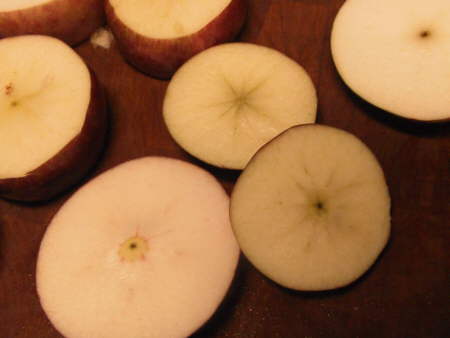
It’s very easy to get the largest possible yield from your apples. This 30-second video shows you how.

see how it's done!

Slice the apple in thirds parallel to the equator of the fruit. Then, cut around the small, green circle of the core. There is less core at the top and the bottom of the fruit than there is in the center where the seeds are. By dividing the apples into thirds, you get a higher percentage yield than if you use a corer or slice across the whole fruit.

The International Academy of Tastes

Thursday, October 12th, 2006

Dear Dr. Orange,

When I was in elementary school we learned about the taste buds on the different parts of the tongue. If I remember right these were sweet, salty, sour and bitter. Recently I heard a story on NPR about another taste called umami that was identified in Japan. I just checked it out and found another possible taste having to do w/ fatty acids. This is really rocking my world! How does a flavor get to be classified as a taste? Is there an International Taste Association? What’s the story? How do food artists like yourself use this palette of flavors to create deliciousness?

Curious in PA

Dear Mrs. PA,

When I was in elementary school, they taught us about the four food groups and recommended getting equal portions each of grain, meat, fruit or vegetable, and dairy: thus the invocation to eat three square meals a day. Things change; you turn around and all of a sudden you’re an old fart eating triangularly and trying to taste six things with a tongue you were told is only good for four, wondering when things stopped being the way they used to (whaddaya mean, Pluto’s not a planet? Did my very educated mother just serve us nothing? apparently.). (more…)